Showing:

Annotations
Attributes
Diagrams
Instances
Properties
Source
Used by
Included schema dynamicFeature.xsd
Namespace http://standardit.tapio.fi/schemas/workingsitetrade/offer
Annotations
Basic support for tracking moving objects and objects with changing state. GML is an OGC Standard. Copyright (c) 2001,2005,2010 Open Geospatial Consortium. To obtain additional rights of use, visit http://www.opengeospatial.org/legal/ .
Properties
attribute form default: unqualified
element form default: qualified
version: 3.1.1.2
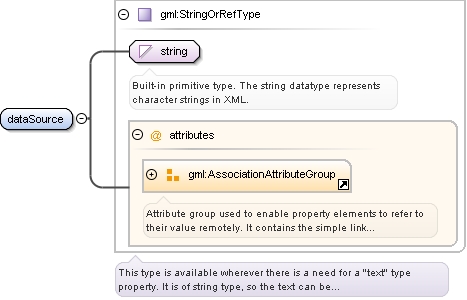
Element gml:dataSource
Namespace http://www.opengis.net/gml
Diagram
Diagram index10.tmp#id444 index10.tmp#id463
Type gml:StringOrRefType
Properties
content: complex
Used by
Attributes
QName Type Fixed Default Use Annotation
gml:remoteSchema anyURI optional
Reference to an XML Schema fragment that specifies the content model of the propertys value. This is in conformance with the XML Schema Section 4.14 Referencing Schemas from Elsewhere.
xlink:actuate xlink:actuateType optional
xlink:arcrole xlink:arcroleType optional
xlink:href xlink:hrefType optional
xlink:role xlink:roleType optional
xlink:show xlink:showType optional
xlink:title xlink:titleAttrType optional
xlink:type xlink:typeType simple optional
Source
<element name="dataSource" type="gml:StringOrRefType"/>
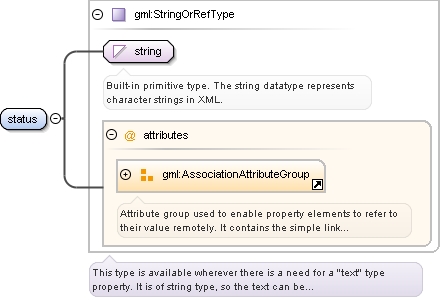
Element gml:status
Namespace http://www.opengis.net/gml
Diagram
Diagram index10.tmp#id444 index10.tmp#id463
Type gml:StringOrRefType
Properties
content: complex
Used by
Attributes
QName Type Fixed Default Use Annotation
gml:remoteSchema anyURI optional
Reference to an XML Schema fragment that specifies the content model of the propertys value. This is in conformance with the XML Schema Section 4.14 Referencing Schemas from Elsewhere.
xlink:actuate xlink:actuateType optional
xlink:arcrole xlink:arcroleType optional
xlink:href xlink:hrefType optional
xlink:role xlink:roleType optional
xlink:show xlink:showType optional
xlink:title xlink:titleAttrType optional
xlink:type xlink:typeType simple optional
Source
<element name="status" type="gml:StringOrRefType"/>
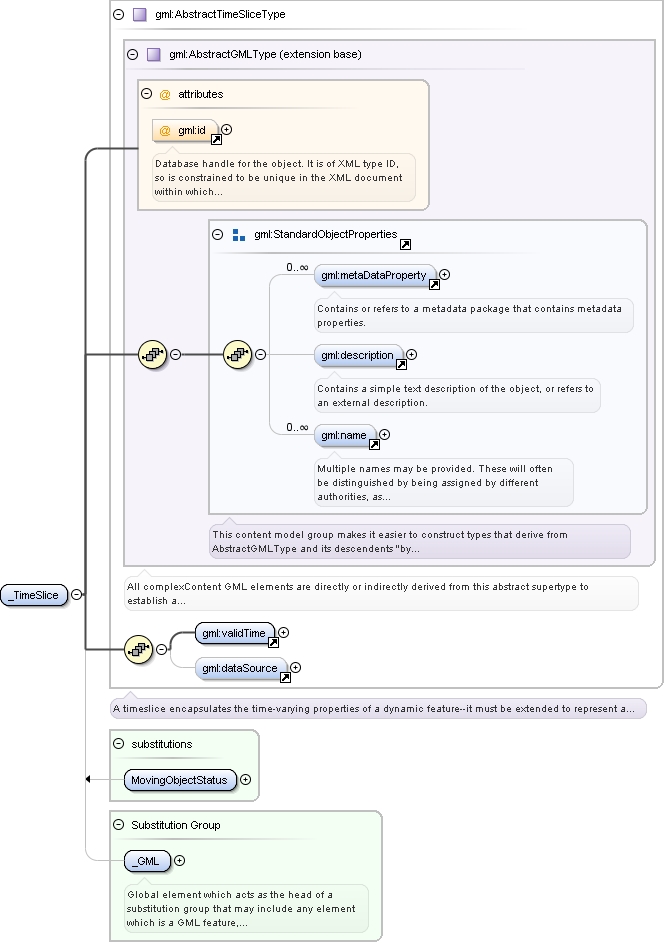
Element gml:_TimeSlice
Namespace http://www.opengis.net/gml
Diagram
Diagram index10.tmp#id476 index10.tmp#id442 index10.tmp#id462 index10.tmp#id464 index10.tmp#id441 index10.tmp#id440 index25.tmp#id1369 index33.tmp#id1363 index33.tmp#id1368 index33.tmp#id1366 index10.tmp#id1367
Type gml:AbstractTimeSliceType
Type hierarchy
Properties
content: complex
abstract: true
Substitution Group
Substitution Group Affiliation
Used by
Model gml:metaDataProperty* , gml:description{0,1} , gml:name* , gml:validTime , gml:dataSource{0,1}
Children gml:dataSource, gml:description, gml:metaDataProperty, gml:name, gml:validTime
Instance
<gml:_TimeSlice gml:id="">
  <gml:metaDataProperty about="" xlink:actuate="" xlink:arcrole="" xlink:href="" gml:remoteSchema="" xlink:role="" xlink:show="" xlink:title="" xlink:type="simple">{0,unbounded}</gml:metaDataProperty>
  <gml:description xlink:actuate="" xlink:arcrole="" xlink:href="" gml:remoteSchema="" xlink:role="" xlink:show="" xlink:title="" xlink:type="simple">{0,1}</gml:description>
  <gml:name codeSpace="">{0,unbounded}</gml:name>
</gml:_TimeSlice>
Attributes
QName Type Fixed Default Use Annotation
gml:id ID optional
Database handle for the object. It is of XML type ID, so is constrained to be unique in the XML document within which it occurs. An external identifier for the object in the form of a URI may be constructed using standard XML and XPointer methods. This is done by concatenating the URI for the document, a fragment separator, and the value of the id attribute.
Source
<element name="_TimeSlice" type="gml:AbstractTimeSliceType" abstract="true" substitutionGroup="gml:_GML"/>
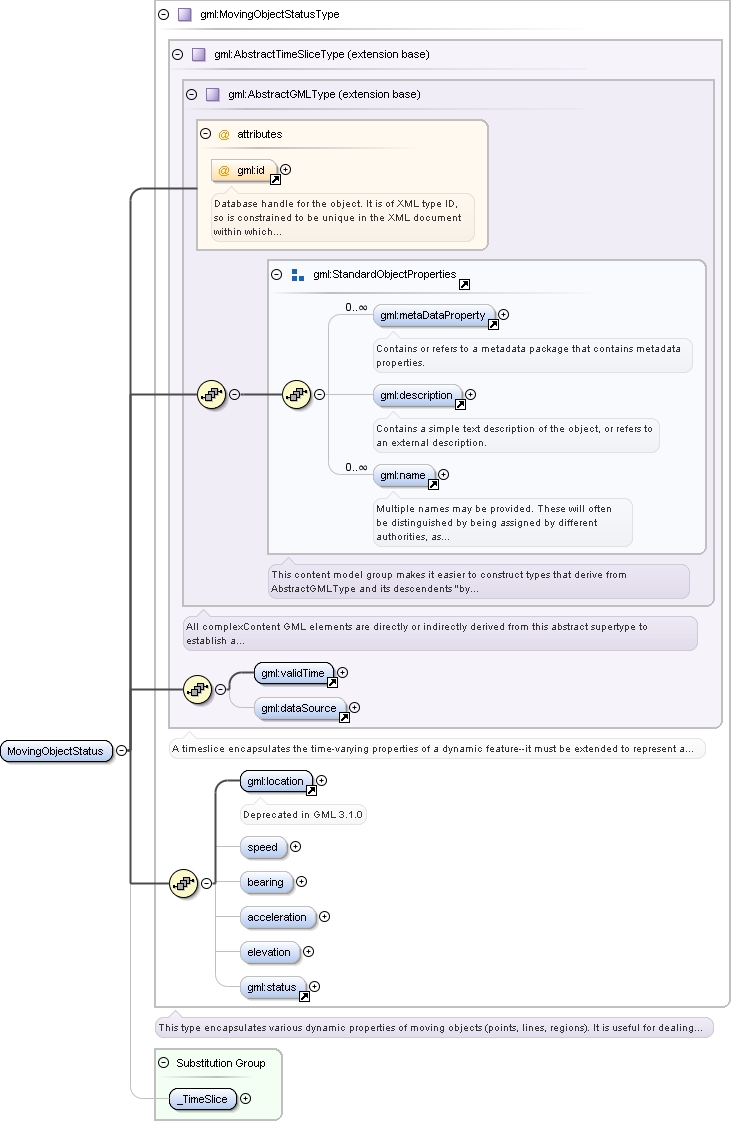
Element gml:MovingObjectStatus
Namespace http://www.opengis.net/gml
Diagram
Diagram index10.tmp#id476 index10.tmp#id442 index10.tmp#id462 index10.tmp#id464 index10.tmp#id441 index10.tmp#id440 index25.tmp#id1369 index33.tmp#id1363 index33.tmp#id1368 index17.tmp#id1383 index33.tmp#id1404 index33.tmp#id1407 index33.tmp#id1420 index33.tmp#id1421 index33.tmp#id1364 index33.tmp#id1382 index33.tmp#id1365
Type gml:MovingObjectStatusType
Type hierarchy
Properties
content: complex
Substitution Group Affiliation
Used by
Complex Type gml:TrackType
Model gml:metaDataProperty* , gml:description{0,1} , gml:name* , gml:validTime , gml:dataSource{0,1} , gml:location , gml:speed{0,1} , gml:bearing{0,1} , gml:acceleration{0,1} , gml:elevation{0,1} , gml:status{0,1}
Children gml:acceleration, gml:bearing, gml:dataSource, gml:description, gml:elevation, gml:location, gml:metaDataProperty, gml:name, gml:speed, gml:status, gml:validTime
Instance
<gml:MovingObjectStatus gml:id="">
  <gml:metaDataProperty about="" xlink:actuate="" xlink:arcrole="" xlink:href="" gml:remoteSchema="" xlink:role="" xlink:show="" xlink:title="" xlink:type="simple">{0,unbounded}</gml:metaDataProperty>
  <gml:description xlink:actuate="" xlink:arcrole="" xlink:href="" gml:remoteSchema="" xlink:role="" xlink:show="" xlink:title="" xlink:type="simple">{0,1}</gml:description>
  <gml:name codeSpace="">{0,unbounded}</gml:name>
</gml:MovingObjectStatus>
Attributes
QName Type Fixed Default Use Annotation
gml:id ID optional
Database handle for the object. It is of XML type ID, so is constrained to be unique in the XML document within which it occurs. An external identifier for the object in the form of a URI may be constructed using standard XML and XPointer methods. This is done by concatenating the URI for the document, a fragment separator, and the value of the id attribute.
Source
<element name="MovingObjectStatus" type="gml:MovingObjectStatusType" substitutionGroup="gml:_TimeSlice"/>
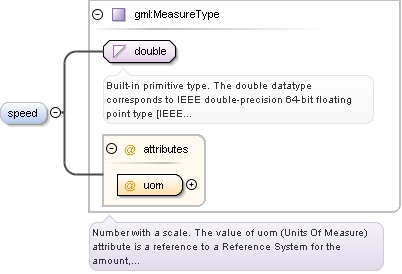
Element gml:MovingObjectStatusType / gml:speed
Namespace http://www.opengis.net/gml
Diagram
Diagram index1.tmp#id1406 index1.tmp#id1405
Type gml:MeasureType
Properties
content: complex
minOccurs: 0
Attributes
QName Type Fixed Default Use Annotation
uom anyURI required
Source
<element name="speed" type="gml:MeasureType" minOccurs="0"/>
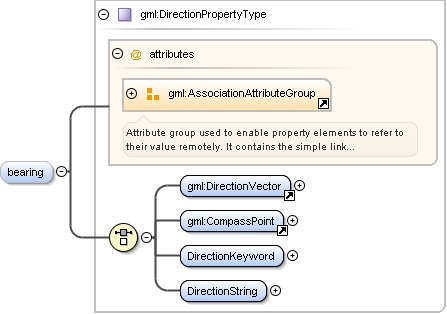
Element gml:MovingObjectStatusType / gml:bearing
Namespace http://www.opengis.net/gml
Diagram
Diagram index10.tmp#id444 index61.tmp#id1409 index61.tmp#id1416 index61.tmp#id1418 index61.tmp#id1419 index61.tmp#id1408
Type gml:DirectionPropertyType
Properties
content: complex
minOccurs: 0
Model gml:DirectionVector | gml:CompassPoint | gml:DirectionKeyword | gml:DirectionString
Children gml:CompassPoint, gml:DirectionKeyword, gml:DirectionString, gml:DirectionVector
Instance
<gml:bearing xlink:actuate="" xlink:arcrole="" xlink:href="" gml:remoteSchema="" xlink:role="" xlink:show="" xlink:title="" xlink:type="simple">
  <gml:DirectionVector>{1,1}</gml:DirectionVector>
  <gml:CompassPoint>{1,1}</gml:CompassPoint>
  <gml:DirectionKeyword codeSpace="">{1,1}</gml:DirectionKeyword>
  <gml:DirectionString xlink:actuate="" xlink:arcrole="" xlink:href="" gml:remoteSchema="" xlink:role="" xlink:show="" xlink:title="" xlink:type="simple">{1,1}</gml:DirectionString>
</gml:bearing>
Attributes
QName Type Fixed Default Use Annotation
gml:remoteSchema anyURI optional
Reference to an XML Schema fragment that specifies the content model of the propertys value. This is in conformance with the XML Schema Section 4.14 Referencing Schemas from Elsewhere.
xlink:actuate xlink:actuateType optional
xlink:arcrole xlink:arcroleType optional
xlink:href xlink:hrefType optional
xlink:role xlink:roleType optional
xlink:show xlink:showType optional
xlink:title xlink:titleAttrType optional
xlink:type xlink:typeType simple optional
Source
<element name="bearing" type="gml:DirectionPropertyType" minOccurs="0"/>
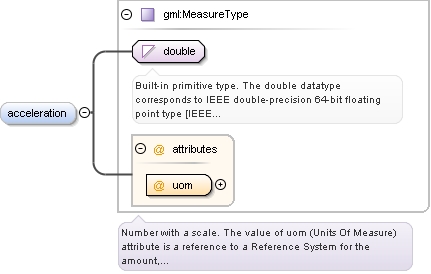
Element gml:MovingObjectStatusType / gml:acceleration
Namespace http://www.opengis.net/gml
Diagram
Diagram index1.tmp#id1406 index1.tmp#id1405
Type gml:MeasureType
Properties
content: complex
minOccurs: 0
Attributes
QName Type Fixed Default Use Annotation
uom anyURI required
Source
<element name="acceleration" type="gml:MeasureType" minOccurs="0"/>
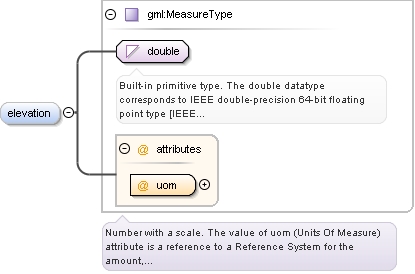
Element gml:MovingObjectStatusType / gml:elevation
Namespace http://www.opengis.net/gml
Diagram
Diagram index1.tmp#id1406 index1.tmp#id1405
Type gml:MeasureType
Properties
content: complex
minOccurs: 0
Attributes
QName Type Fixed Default Use Annotation
uom anyURI required
Source
<element name="elevation" type="gml:MeasureType" minOccurs="0"/>
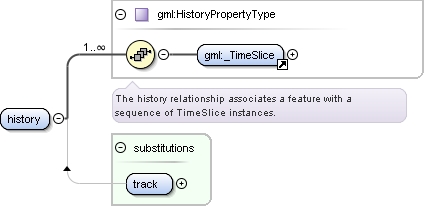
Element gml:history
Namespace http://www.opengis.net/gml
Diagram
Diagram index33.tmp#id1365 index33.tmp#id1424 index33.tmp#id1423
Type gml:HistoryPropertyType
Properties
content: complex
Substitution Group
Used by
Element Group gml:dynamicProperties
Model gml:_TimeSlice
Children gml:_TimeSlice
Instance
<gml:history>
  <gml:_TimeSlice gml:id="">{1,1}</gml:_TimeSlice>
</gml:history>
Source
<element name="history" type="gml:HistoryPropertyType"/>
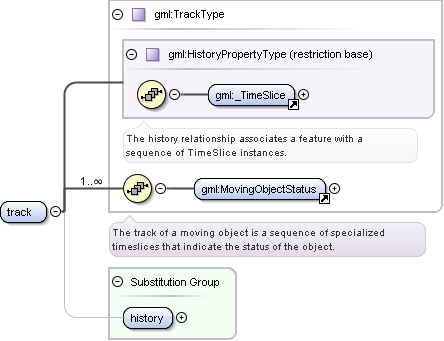
Element gml:track
Namespace http://www.opengis.net/gml
Diagram
Diagram index33.tmp#id1365 index33.tmp#id1424 index33.tmp#id1366 index33.tmp#id1425 index33.tmp#id1422
Type gml:TrackType
Type hierarchy
Properties
content: complex
Substitution Group Affiliation
Model gml:MovingObjectStatus
Children gml:MovingObjectStatus
Instance
<gml:track>
  <gml:MovingObjectStatus gml:id="">{1,1}</gml:MovingObjectStatus>
</gml:track>
Source
<element name="track" type="gml:TrackType" substitutionGroup="gml:history"/>
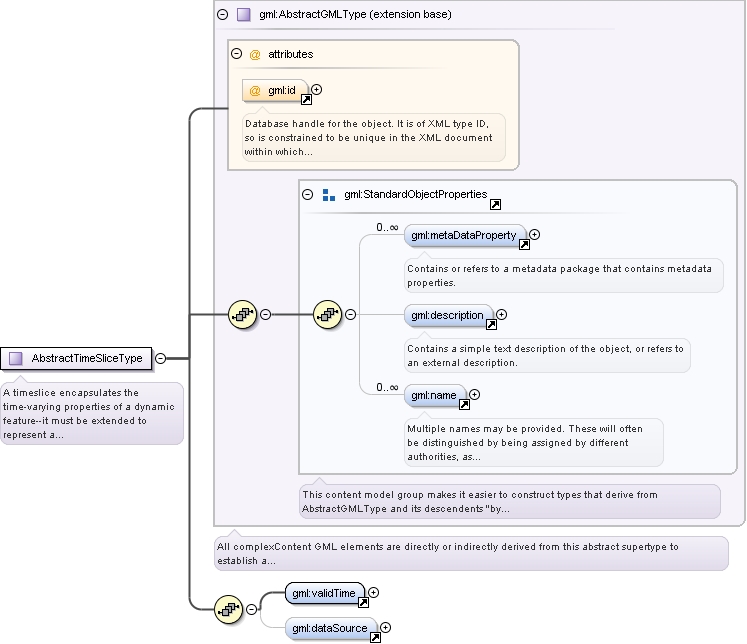
Complex Type gml:AbstractTimeSliceType
Namespace http://www.opengis.net/gml
Annotations
A timeslice encapsulates the time-varying properties of a dynamic feature--it must be extended to represent a timestamped projection of a feature. The dataSource property describes how the temporal data was acquired.
Diagram
Diagram index10.tmp#id476 index10.tmp#id442 index10.tmp#id462 index10.tmp#id464 index10.tmp#id441 index10.tmp#id440 index25.tmp#id1369 index33.tmp#id1363
Type extension of gml:AbstractGMLType
Type hierarchy
Properties
abstract: true
Used by
Model gml:metaDataProperty* , gml:description{0,1} , gml:name* , gml:validTime , gml:dataSource{0,1}
Children gml:dataSource, gml:description, gml:metaDataProperty, gml:name, gml:validTime
Attributes
QName Type Fixed Default Use Annotation
gml:id ID optional
Database handle for the object. It is of XML type ID, so is constrained to be unique in the XML document within which it occurs. An external identifier for the object in the form of a URI may be constructed using standard XML and XPointer methods. This is done by concatenating the URI for the document, a fragment separator, and the value of the id attribute.
Source
<complexType name="AbstractTimeSliceType" abstract="true">
  <annotation>
    <documentation xml:lang="en">A timeslice encapsulates the time-varying properties of a dynamic feature--it 
        must be extended to represent a timestamped projection of a feature. The dataSource 
        property describes how the temporal data was acquired.</documentation>
  </annotation>
  <complexContent>
    <extension base="gml:AbstractGMLType">
      <sequence>
        <element ref="gml:validTime"/>
        <element ref="gml:dataSource" minOccurs="0"/>
      </sequence>
    </extension>
  </complexContent>
</complexType>
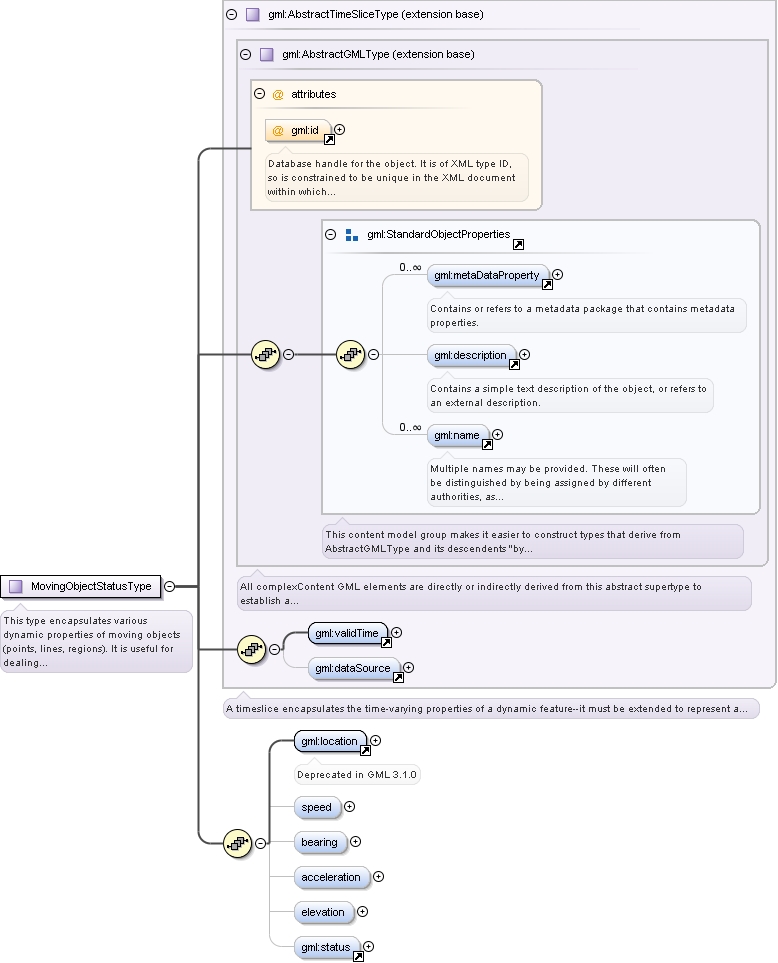
Complex Type gml:MovingObjectStatusType
Namespace http://www.opengis.net/gml
Annotations
This type encapsulates various dynamic properties of moving objects (points, lines, regions). It is useful for dealing with features whose geometry or topology changes over time.
Diagram
Diagram index10.tmp#id476 index10.tmp#id442 index10.tmp#id462 index10.tmp#id464 index10.tmp#id441 index10.tmp#id440 index25.tmp#id1369 index33.tmp#id1363 index33.tmp#id1368 index17.tmp#id1383 index33.tmp#id1404 index33.tmp#id1407 index33.tmp#id1420 index33.tmp#id1421 index33.tmp#id1364
Type extension of gml:AbstractTimeSliceType
Type hierarchy
Used by
Model gml:metaDataProperty* , gml:description{0,1} , gml:name* , gml:validTime , gml:dataSource{0,1} , gml:location , gml:speed{0,1} , gml:bearing{0,1} , gml:acceleration{0,1} , gml:elevation{0,1} , gml:status{0,1}
Children gml:acceleration, gml:bearing, gml:dataSource, gml:description, gml:elevation, gml:location, gml:metaDataProperty, gml:name, gml:speed, gml:status, gml:validTime
Attributes
QName Type Fixed Default Use Annotation
gml:id ID optional
Database handle for the object. It is of XML type ID, so is constrained to be unique in the XML document within which it occurs. An external identifier for the object in the form of a URI may be constructed using standard XML and XPointer methods. This is done by concatenating the URI for the document, a fragment separator, and the value of the id attribute.
Source
<complexType name="MovingObjectStatusType">
  <annotation>
    <documentation xml:lang="en">This type encapsulates various dynamic properties of moving objects        
             (points, lines, regions). It is useful for dealing with features whose        
             geometry or topology changes over time.</documentation>
  </annotation>
  <complexContent>
    <extension base="gml:AbstractTimeSliceType">
      <sequence>
        <element ref="gml:location"/>
        <element name="speed" type="gml:MeasureType" minOccurs="0"/>
        <element name="bearing" type="gml:DirectionPropertyType" minOccurs="0"/>
        <element name="acceleration" type="gml:MeasureType" minOccurs="0"/>
        <element name="elevation" type="gml:MeasureType" minOccurs="0"/>
        <element ref="gml:status" minOccurs="0"/>
      </sequence>
    </extension>
  </complexContent>
</complexType>
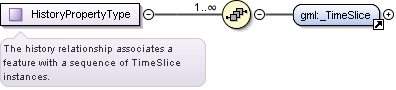
Complex Type gml:HistoryPropertyType
Namespace http://www.opengis.net/gml
Annotations
The history relationship associates a feature with a sequence of TimeSlice instances.
Diagram
Diagram index33.tmp#id1365
Used by
Element gml:history
Complex Type gml:TrackType
Model gml:_TimeSlice
Children gml:_TimeSlice
Source
<complexType name="HistoryPropertyType">
  <annotation>
    <documentation xml:lang="en">The history relationship associates a feature with a sequence of TimeSlice instances.</documentation>
  </annotation>
  <sequence maxOccurs="unbounded">
    <element ref="gml:_TimeSlice"/>
  </sequence>
</complexType>
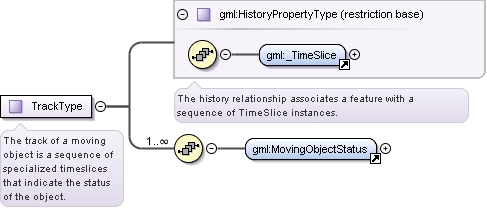
Complex Type gml:TrackType
Namespace http://www.opengis.net/gml
Annotations
The track of a moving object is a sequence of specialized timeslices that indicate the status of the object.
Diagram
Diagram index33.tmp#id1365 index33.tmp#id1424 index33.tmp#id1366
Type restriction of gml:HistoryPropertyType
Type hierarchy
Used by
Element gml:track
Model gml:MovingObjectStatus
Children gml:MovingObjectStatus
Source
<complexType name="TrackType">
  <annotation>
    <documentation xml:lang="en">The track of a moving object is a sequence of specialized timeslices        that indicate the status of the object.</documentation>
  </annotation>
  <complexContent>
    <restriction base="gml:HistoryPropertyType">
      <sequence maxOccurs="unbounded">
        <element ref="gml:MovingObjectStatus"/>
      </sequence>
    </restriction>
  </complexContent>
</complexType>
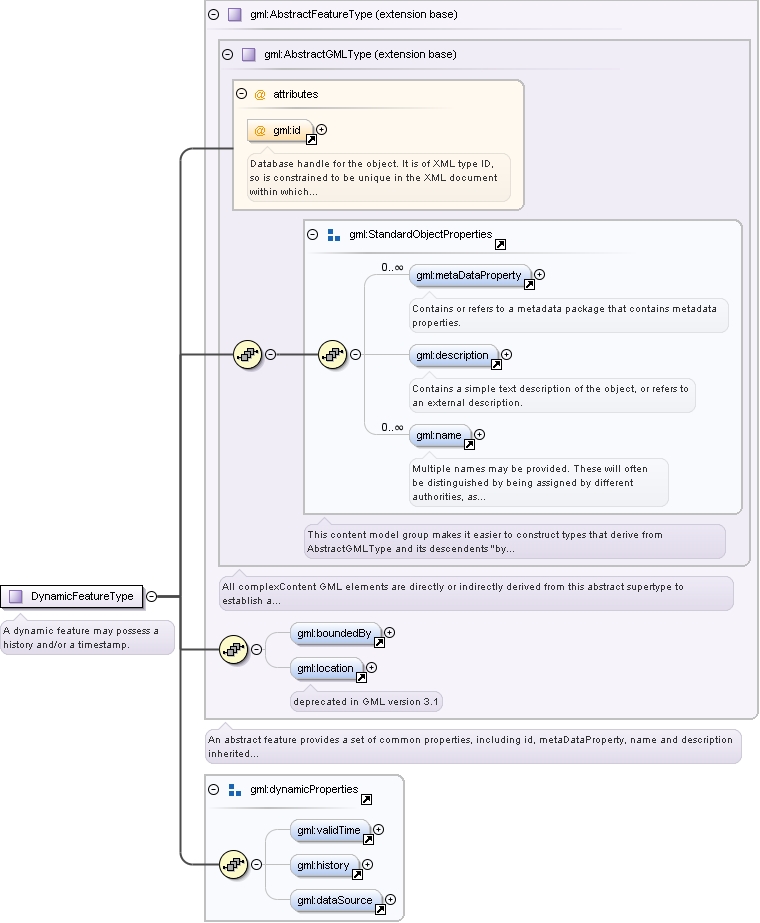
Complex Type gml:DynamicFeatureType
Namespace http://www.opengis.net/gml
Annotations
A dynamic feature may possess a history and/or a timestamp.
Diagram
Diagram index10.tmp#id476 index10.tmp#id442 index10.tmp#id462 index10.tmp#id464 index10.tmp#id441 index10.tmp#id440 index17.tmp#id1429 index17.tmp#id1383 index17.tmp#id1428 index25.tmp#id1369 index33.tmp#id1422 index33.tmp#id1363 index33.tmp#id1426
Type extension of gml:AbstractFeatureType
Type hierarchy
Model gml:metaDataProperty* , gml:description{0,1} , gml:name* , gml:boundedBy{0,1} , gml:location{0,1} , gml:validTime{0,1} , gml:history{0,1} , gml:dataSource{0,1}
Children gml:boundedBy, gml:dataSource, gml:description, gml:history, gml:location, gml:metaDataProperty, gml:name, gml:validTime
Attributes
QName Type Fixed Default Use Annotation
gml:id ID optional
Database handle for the object. It is of XML type ID, so is constrained to be unique in the XML document within which it occurs. An external identifier for the object in the form of a URI may be constructed using standard XML and XPointer methods. This is done by concatenating the URI for the document, a fragment separator, and the value of the id attribute.
Source
<complexType name="DynamicFeatureType">
  <annotation>
    <documentation>A dynamic feature may possess a history and/or a timestamp.</documentation>
  </annotation>
  <complexContent>
    <extension base="gml:AbstractFeatureType">
      <group ref="gml:dynamicProperties"/>
    </extension>
  </complexContent>
</complexType>
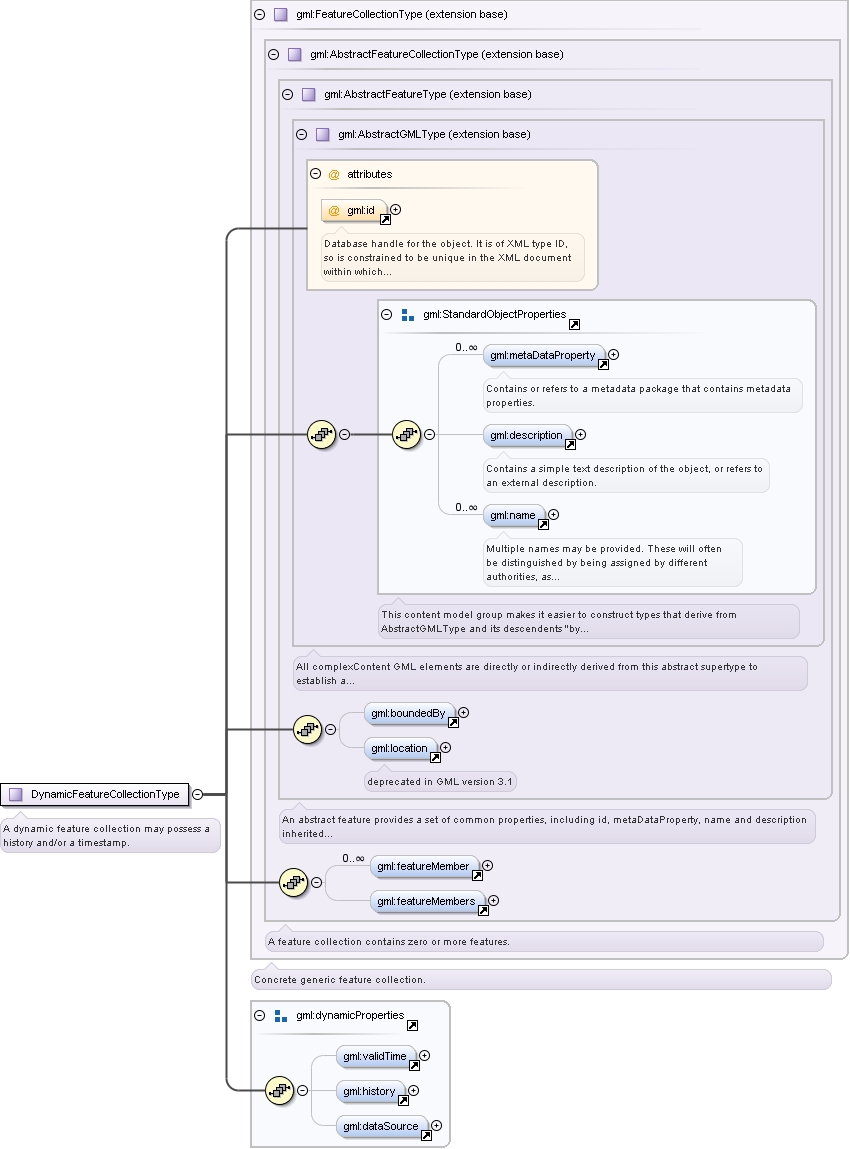
Complex Type gml:DynamicFeatureCollectionType
Namespace http://www.opengis.net/gml
Annotations
A dynamic feature collection may possess a history and/or a timestamp.
Diagram
Diagram index10.tmp#id476 index10.tmp#id442 index10.tmp#id462 index10.tmp#id464 index10.tmp#id441 index10.tmp#id440 index17.tmp#id1429 index17.tmp#id1383 index17.tmp#id1428 index17.tmp#id1439 index17.tmp#id1452 index17.tmp#id1438 index17.tmp#id1437 index25.tmp#id1369 index33.tmp#id1422 index33.tmp#id1363 index33.tmp#id1426
Type extension of gml:FeatureCollectionType
Type hierarchy
Model gml:metaDataProperty* , gml:description{0,1} , gml:name* , gml:boundedBy{0,1} , gml:location{0,1} , gml:featureMember* , gml:featureMembers{0,1} , gml:validTime{0,1} , gml:history{0,1} , gml:dataSource{0,1}
Children gml:boundedBy, gml:dataSource, gml:description, gml:featureMember, gml:featureMembers, gml:history, gml:location, gml:metaDataProperty, gml:name, gml:validTime
Attributes
QName Type Fixed Default Use Annotation
gml:id ID optional
Database handle for the object. It is of XML type ID, so is constrained to be unique in the XML document within which it occurs. An external identifier for the object in the form of a URI may be constructed using standard XML and XPointer methods. This is done by concatenating the URI for the document, a fragment separator, and the value of the id attribute.
Source
<complexType name="DynamicFeatureCollectionType">
  <annotation>
    <documentation>A dynamic feature collection may possess a history and/or a timestamp.</documentation>
  </annotation>
  <complexContent>
    <extension base="gml:FeatureCollectionType">
      <group ref="gml:dynamicProperties"/>
    </extension>
  </complexContent>
</complexType>
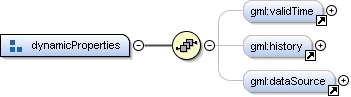
Element Group gml:dynamicProperties
Namespace http://www.opengis.net/gml
Diagram
Diagram index25.tmp#id1369 index33.tmp#id1422 index33.tmp#id1363
Used by
Model gml:validTime{0,1} , gml:history{0,1} , gml:dataSource{0,1}
Children gml:dataSource, gml:history, gml:validTime
Source
<group name="dynamicProperties">
  <sequence>
    <element ref="gml:validTime" minOccurs="0"/>
    <element ref="gml:history" minOccurs="0"/>
    <element ref="gml:dataSource" minOccurs="0"/>
  </sequence>
</group>